“Knock it off, Drew,” Mr. Dale barked from across the room.
Drew froze for half a second, looked over, then grinned and darted after James again. James, a Scout of about twelve, twisted around a table trying to get away while two other Scouts scooted their chairs aside.
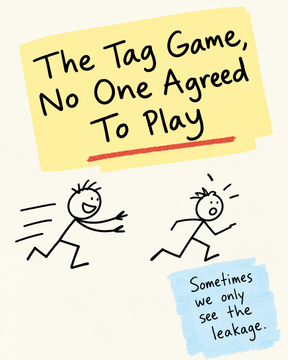
“Dude, stop it!” James yelled. Yet, as far as Drew was concerned, they were playing tag. The only problem was nobody else had agreed to join in yet.
“Drew!” Mr. Dale called again. “We already talked about this. Leave them alone.”
Drew stopped, looked at the floor, and nodded. “Okay.”
A few minutes later he interrupted someone. Later, when everyone started packing up, he could not find the notebook he had been reminded three times to bring.
That evening, Drew’s mom was waiting when he walked through the door. “Mr. Dale talked to me again.” Drew stopped with one hand still on his backpack, instantly felt shame and blame cropping up.
“He said you were chasing kids around, interrupting, and forgot your notebook. Drew, you’re thirteen. You know better. Why can't you...”
“I know, im sorry Mom.” He interrupted.
“Then why do you keep doing it?”
“And your room is still a mess, the trash is full, and your homework has not been started and is wrinkled up mess in your pack. Your sister doesn’t need to be reminded every time.”
Drew stared at the floor and nodded and headed toward his room. Worst part, Drew knew his sister had not picked up the yard, after the dogs in 2-weeks. She was sitting on the couch behind mom, grinning. Yet, he also got all of it, understood it, even wanted to do better. That was part of the problem.
Drew has ADHD and maybe some other neurodivergent wiring nobody has decided to test for yet. His mind may understand the rules perfectly well while his attention, impulses, and social instincts run a different operating system. All the way his nervous system is a tense bear and he is shaming himself 10-times more then anyone else is. All of which really just makes things worse.
Of course, That does not excuse ignoring boundaries or bad behavior. Yet, maybe what Drew needs less is more blame, judgment, and shame. Instead, maybe understanding and not 101 "helpful" ideas would go a long way. If he hears things like this from his scout leaders, own parents, and smirking sister. Just think what he may be hearing from teachers and other kids at school.
There is actual scientific research that suggests what is happening to Drew, happens to many neurodivergents, and it can actually lead to an accumulated form of C-PTSD. It literally becomes "trauma", through repeated comments and directions, wrapped up in ones own self blame for not being able to do it. Thus the nervous system learns shame, masking, pressure, and the sense that no matter how hard you try, there is always one more thing you got wrong.
Sometimes what we see at a Scout meeting is only the leakage. The forgotten notebook. The interruption. The odd behavior. The Scout who seems shy, loud, scattered, immature, or difficult.
We rarely know the full story, nor do we need too. We can still approach things with compassion, understanding, and patients. I do not mean lead bad behavior linger, but maybe approach it in a different way. Everyone is different, what works for one, does not work for another. Just like we have have different favorite colors, foods, shows, smells, and things to do.