 |
Scientist
|
|
Inertia
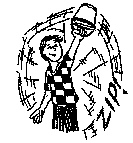
This is easy and fun for the boys to do. Make it into a contest. How many revolutions
can they do with a bucket 1/2 full of water without spilling the water? Do it
with a steady motion. The water shouldn't spill out because the water actually
crashes upward into the bottom of the pail. This is the upward pull that you feel
against your arm. On the way down, the pail moves faster downward than the water
can naturally fall. The pail catches the water moving upward, and pushes the water
from behind on the way down.
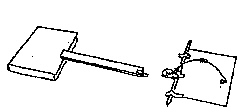 Another example
of inertia uses miniature cars and a toy racing track with a gentle slope. A book
with a ruler for the car to ride on will work. Start 1 to £ cars with a small
plastic figure on each at the top of the race track. Let the cars go, and see
how far they travel. The plastic person should stay on top of the car. Now, create
an obstacle in the way, past the end of the track. The cars will gain speed going
down the track, and run into the obstacle. The figures on top of the cars will
not stop however. The figures have the same speed as the car, and they are free
to continue moving forward. The faster the cars, the farther the figures will
fly. Remind the boys to wear a seat belt.
Another example
of inertia uses miniature cars and a toy racing track with a gentle slope. A book
with a ruler for the car to ride on will work. Start 1 to £ cars with a small
plastic figure on each at the top of the race track. Let the cars go, and see
how far they travel. The plastic person should stay on top of the car. Now, create
an obstacle in the way, past the end of the track. The cars will gain speed going
down the track, and run into the obstacle. The figures on top of the cars will
not stop however. The figures have the same speed as the car, and they are free
to continue moving forward. The faster the cars, the farther the figures will
fly. Remind the boys to wear a seat belt.
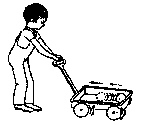
Use a simple wagon with a tennis ball for a third example of inertia.
Place a tennis ball in the middle of the wagon, and give the wagon a quick pull.
When the wagon moves forward, the ball hits the back of the wagon. Why? Inertia
is a resistance to any change in motion. An object that is stationary remains
that way until some force causes it to move. The tennis ball is not attached
to the wagon. Because of the tennis ball's inertia, it remains stationary even
though the wagon moves forward. The wagon actually moves out from under the
tennis ball.
Return to Activity Pins
Return to Scientist Pin